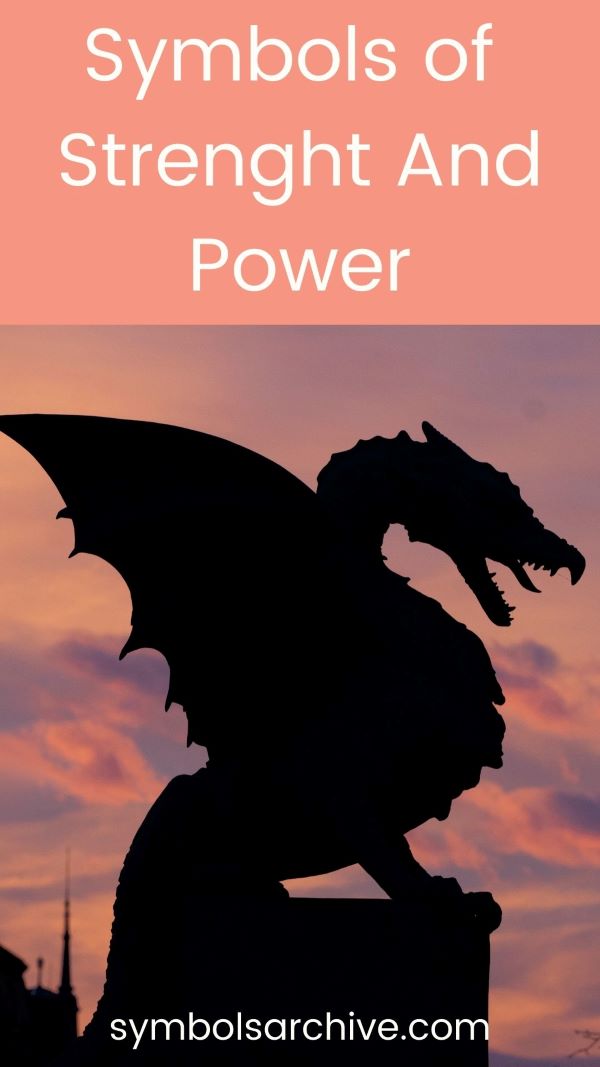
Symbols Of Strength And Power
Symbols of strength and power have been employed by people all over the world since the beginning of time. These symbols represent the beliefs of the people, which provide an understanding of their way of life.
Most of these symbols are used in body art or tattoos, jewelry, and as talismans in times of need for a boost of strength. They are also often depicted in artwork.
Symbols Of Strength And Power

Here’s a list of symbols of strength and power across cultures.
1. Eagle

Used in Europe and Near East, the eagle–usually a golden eagle–symbolizes not only strength and power but leadership and dynasty as well.
Eagles are large birds of prey that are built powerfully. They have no natural predators and are known to prey on vertebrates that are much larger than they are.
Napoleon Bonaparte adopted the golden eagle symbol as a military standard and used the animal in the French imperial coat of arms.
The eagle represented strength in the Aztec culture. This was demonstrated in eagle drawings on warriors after completing their training. The drawings signified that these warriors had proven themselves not only in terms of strength but valor and courage as well.
2. Griffin

Griffin, also spelled griffon or gryphon, is a mythological creature that possesses the body of a lion and the head of a bird, usually an eagle’s. It may be winged or wingless.
The griffin symbol was a popular decorative motif used by the ancient Middle Eastern and Mediterranean people.
Christians believe that griffins are related to the sun, denoting its wealth. In Christian art, griffins represent strength, as well as watchfulness and invincibility. No wonder Alexander the Great used the griffin symbol as his sign.
Griffins are important to Christians because they were linked to Michael the Archangel. Two griffins are symbolic of enlightenment. A griffin depicted with its foot on a ball is said to demonstrate enlightenment protecting the wisdom, which is represented by the ball.
3. Phoenix
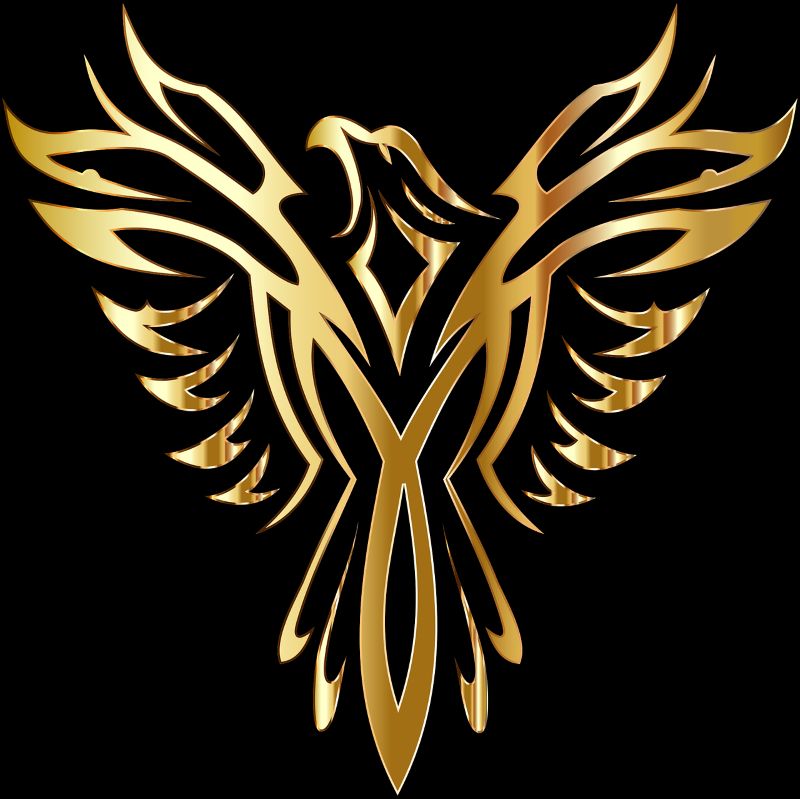
Phoenix, an immortal bird in Greek mythology that dies and regenerates from the ashes, is also associated with the sun. Legends vary as to how it dies. Some say it simply dies and decomposes, but it is more popularly depicted as bursting in flames and turning into ashes, from which it arises and is born again.
Herodutus attributed its origin to Ancient Egypt. Modern scholars claim that classical folklore may have influenced the Egyptian texts. Over time, the phoenix has extended beyond its origins and became symbolic of resilience and strength across the globe, as well as renewal and resurrection.
4. Thunderbolt

A thunderbolt or lightning bolt is associated with Indo-European mythology where it was identified with the “Sky Father.” It has appeared in numerous other mythologies as well, often as the divine weapon of sky and weather gods.
The thunderbolt has also been used as a powerful symbol throughout history. In fact, the thunderbolt emblem is often adopted in military symbolism.
In Norse mythology, the thunderbolt is a symbol of Thor, the protector of mankind deemed the physically the most powerful of the gods. The thunderbolt is also associated with the creation of the thunderbird, a mythological creature of great power and strength.
5. Dragon

This mythical creature is used as a symbol of strength and power both in Eastern and Western cultures.
In the East where dragons are more popular, these mythical beings are employed as symbols strength and power, as well as prosperity and good luck.
In history, the dragon was used by the emperor of China as a heraldic emblem to symbolize his strength and imperial authority. This originated from the legends that say the Yellow Emperor, who was China’s first ruler, had turned into a half-dragon before his ascencion into heaven.
Dragons in Celtic mythology were said to protect the world and served as gatekeepers to other worlds, often depicted along with the gods. They guarded the secrets and treasures of the universe and were deemed the most powerful of all Celtic symbols.
The dragon, being a symbol of strength and power, is used in commending people for their strength and power. To be called a dragon means you are strong and powerful.
6. Boar

Boars, also called wild pigs or wild swine, are thought to have originated during the Early Pleistocene in Southeast Asia and spread throughout the Old World.
The boar is associated with Moccus, the Celtic swine-god who was identified with Mercury. As wild boars are considered strong, scary, and dangerous, they became a symbol of strength to the Celtic people.
The boar symbol was also favored by King Richard III of England. He used the badge called the White Boar during his short reign from 1483 until his death in 1485.
7. Sphinx

One of the most enduring symbols in Greek and Egyptian cultures, the sphinx is the same as the griffin, having a lion’s body except instead of an eagle’s head the sphinx has a falcon’s. The sphinx is often depicted with a falcon’s wings as well.
Depictions varies, however. Depending on the myth, the sphinx is sometimes seen as having the head of a cat or a sheep, among other animals – or sometimes even a human, which is the most well-known variant.
In ancient Greece, the sphinx was a malevolent riddle-asker. Its symbolism is interpreted as representative of both mystery and brutality.
In ancient Egypt, this creature was believed to be a guardian and a benevolent protector, contrary to the negative image of its Greek counterpart. The sphinx’s combination of the human head and the lion’s body is viewed as a representation of intelligence and strength.
The most famous sphinx in the world is the Great Sphinx of Giza, found in the southeast of the equally famous pyramids of Giza. Today, the Great Sphinx is used as an official emblem of Egypt and is often featured on the country’s flags, coins, stamps, and official documents.
8. Uruz

Also known as aurochs, aurochsen, ur/ure, urus, or urze, uruz is a symbol of force and untamed strength. The uruz symbol also stands for growth and self-control, as well as persistence and determination.
The uruz is the rune of the ox. It is derived from Ūruz meaning “wild ox” or Ūrą which means “water.”
The symbol came from aurochs, an extinct species of large wild bovine that inhabited Asia, Europe, and North Africa, with the last of its kind recorded to have perished in the Jaktorów Forest in Poland in 1627.


9 Comments