12 Most Popular Tree Symbols And Their Meanings
Are you looking for the most popular tree symbols and their meanings?
Throughout human history, trees have held significant significance in our societies, communities, and personal lives since the beginning of ancient civilizations.
These majestic beings not only provide us with aesthetic pleasure in the natural environment but also serve as sources of shelter and protection.
Hence, it is not surprising that trees have a profound historical association with symbolism and spiritual significance in various cultures worldwide.
In Jewish mythology, for example, a tree known as the “tree of life” or the “tree of souls” exists in the Garden of Eden. It blooms and gives birth to fresh souls, which descend into the Treasury of Souls. Angel Gabriel then retrieves the first soul he encounters by reaching into this treasury.
During the early European history, Celtic and Norse mythologies attributed specific symbolic interpretations to various tree species.
For instance, the massive ash tree of Norse mythology – the Yggdrasil – serves as a vital link between the nine realms, encompassing the realms of the gods (Asgard), the underworld (Niflheim), and the earthly realm (Midgard).
Here are some of the most popular tree symbols and their meanings.
12 Most Popular Tree Symbols And Their Meanings

1. Ash

The popular English term for the tree, “ash,” has its roots in the Old English word “æsc,” which also has meanings related to “spear” as the wood of the ash tree is well-suited for making shafts. This is also possibly due to its spear-shaped leaves.
The ash tree is significant in Norse mythology because it plays a vital role as the Yggdrasil -or the world tree – in this belief system.
In European cultures throughout history, it was believed that burning ash wood had the power to repel malevolent entities.
Moreover, ash trees are associated with sacrifice and heightened consciousness. The durability and everlasting nature of its hardwood have as well made it a timeless representation of solidity and endurance.
2. Redwood
Redwood is a species of Sequoia that thrives along coastal areas. The Spanish Californians referred to it as “palo colorado,” which translates to “red tree.” It acquired the name “redwood” due to its stunningly colored pink or reddish inner wood.
These colossal trees represent strength, resilience, endurance, and healing. Redwoods possess the ability to endure wildfires that would be fatal for other types of trees, and they bear visible marks as evidence of their resilience.
3. Hazel

The hazel tree, which grows in diverse environments like woodlands, gardens, and grasslands, is known for its elongated yellow male catkins, resembling lamb’s tails, which appear during the spring season. It produces green fruits that turn brown as they ripen and are commonly referred to as hazelnuts.
Hazel is renowned for its mystical qualities. It is believed that a hazel branch possesses the power to safeguard against malevolent entities, serve as a wand, and aid in finding water sources.
In most cultures around the world, hazel serves as a symbol of knowledge and wisdom.
4. Oak

Oak is a large tree that belongs to the beech family and produces the acorn as fruit. It is one of the most popular trees in the world, known to live up to a thousand years.
Numerous civilizations in the past held the belief that oak trees possessed immense wisdom and served as a means of divine communication with their gods.
Throughout history, oaks have been associated with traits such as long life, endurance, strength, steadfastness, fertility, justice, authority, and honesty.
5. Maple

The maple tree is synonymous with Canada, holding great significance for the Indigenous communities residing in these regions due to the maple syrup obtained from the iconic tree.
However, it was only in the 19th century that the maple leaf itself became a symbol of Canada’s national identity.
Maple trees are recognized for their vivid hues and unique markings. They are associated with money and power. They also carry several meanings such as love, balance, abundance, generosity, success, longevity, and practicality.
6. Baoab

The baobab tree has existed longer than mankind and predates the separation of continents that took place more than 200 million years ago.
It thrives in the African savannah where few other organisms can survive, hence symbolizing life, resilience, and optimism.
In African culture, the baoab is viewed as a symbol of strength, power, and grace. It is often described as looking like it has been uprooted and then replanted upside down.
7. Fig

The fig tree brims with ancient meaning, having represented wisdom and success for countless centuries.
These deciduous Old World trees were so highly valued by the ancient Greeks that it was considered an honor to present one as a prize to victors in different competitions.
Like apples, figs are commonly linked to the Garden of Eden, where Adam and Eve used fig leaves to conceal their nudity.
In connection with this, figs are used as a symbol for temptation as well as vitality.
8. Alder

The alder tree denotes a harmonious blend of both masculine and feminine energies, which is seen in the simultaneous growth of male and female catkins on a single branch. It is the sole native deciduous tree to ever have tiny cones.
In Irish folklore, the alder tree is known as the dwelling place and sanctuary of the faeries. It is also symbolic of courage and the ever-changing nature of the spirit.
9. Olive

The olive tree is extensively grown and retains its green foliage throughout the year. It is indigenous to warm areas of the Old World.
The olive is widely recognized for its primary symbolic meaning associated with peace. In the Bible, olive trees are used to depict God’s plan of salvation and to represent the promised land.
In ancient Greece, however, this tree – particularly its branches – served as a powerful symbol of peace and friendship.
10. Willow

A tree that thrives in temperate climates, the willow has slender leaves and flexible branches that provide osiers used in crafting baskets.
Seemingly bowing in its appearance, the willow tree is often associated with humility.
In China and other cultures, the willow tree is seen as a symbol of renewal, vitality, and immortality due to its remarkable ability to regrow vigorously after being pruned and to thrive even when a healthy cutting is inserted into the ground, even in an upside-down position.
11. Pine
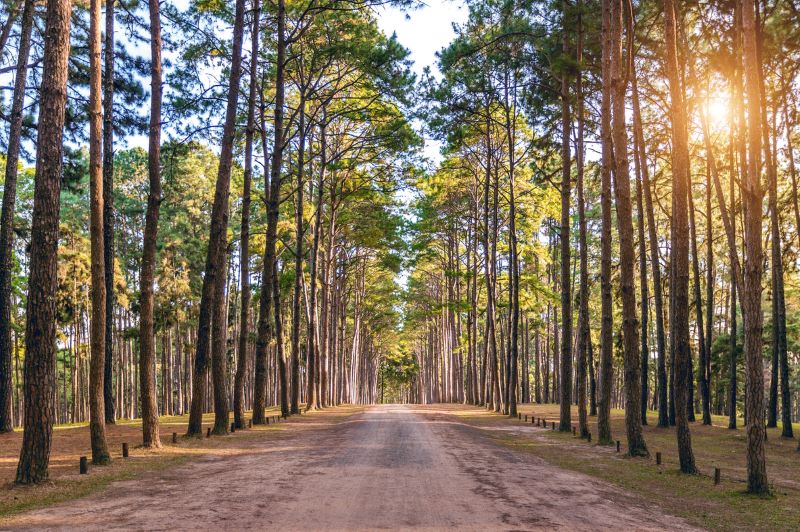
A type of perennial evergreen tree characterized by bundles of elongated needle-like leaves, pine possesses exceptional adaptability that enables it to thrive in the face of challenging weather conditions.
Throughout centuries of history, pine trees have played major roles in various cultures and folklore narratives.
In Native American traditions, the pine symbolizes wisdom and the enduring nature of life. In other cultures, this tree is associated with fertility and the essence of life.
12. Cedar

With its towering and majestic presence, the cedar tree represents a profound symbol of Mary’s virtues, spiritual status, and immaculate union with God – which all reflect her human perfection.
The cedar belongs to a genus of tall trees related to pines. It is well-known for its durable, aromatic wood.
Due to its impressive dimensions, wide girth, and long lifespan, the cedar has come to represent magnificence, nobility, power, strength, and eternity. It also symbolizes peace and holiness.