10 Most Prominent Symbols of England
Are you looking for the most prominent symbols of England?
England is a very special place. From its culture, history, art, architecture, and tourist attractions, there is just something magical and unique about this country that’s part of the United Kingdom.
England is famous for London and Big Ben, the Beatles, David Beckham, tea, fish and chips, black cabs and red double-decker buses, black cabs, and the silly-hatted royal guards.
These things symbolize this beautiful country separated from continental Europe by the North Sea to the east and the English Channel to the south.
Great attention is paid to the symbols of England. Read on to learn more about the most prominent English symbols and their meanings.
10 Most Prominent Symbols of England

Here’s a list of the 10 most prominent symbols of England.
1. St. George’s Cross

A national emblem of England, St. George’s Cross is usually seen as a flag. It is a red cross shaped like a plus sign on a white field.
This symbol became associated with St. George during the Late Middle Ages. St. George, the military saint, is often depicted as a crusader. As it is, the symbol is often linked with the crusades.
The Cross of St. George dates back to the 10th century, when it was used by the Republic of Genoa as its ensign. When St. George became England’s patron saint after the English reformation, the flag also came to be commonly identified as the national flag of England.
St. George’s Cross or the national flag of England is heavily used by English teams competing at sports events.
2. Tudor Rose

Widely recognized as the national flower of England, the Tudor rose is a red rose that was used to signify the unification of the warring parties of the Wars of the Roses under the Tudor dynasty.
King Henry VII adopted the Tudor rose badge conjoining the Red Rose of Lancaster and the White Rose of York. It has since symbolized the English monarchy, also becoming the heraldic emblem of King William and Queen Mary’s reign.
The Tudor rose is used in the emblems of England national rugby union team and the English Golf Union.
3. Three Lions
Have you ever wondered why there are three lions on the shirts of the English football team? Well, this is because the three lions symbol is the emblem of England’s Football Association.
However, this symbol is much more than football. In fact, it has a very long history.
Usually seen as a badge, the image of the three lions is a part of England’s crest.
The three lions being an emblem of England started in the 12th century with King Henry I, whose arms were a lion rampant on a red background.
He married Adeliza of Louvain, whose father also used a lion, and Henry decided to change his arms into two lions.
This tradition with lions was continued by the next generation, when Henry II married Eleanor of Aquitaine whose family crest also featured a lion.
Their son, Richard the Lionheart, united the three lions of his forebears, which became today’s national symbol of England.
4. Union Jack (Flag of the United Kingdom)
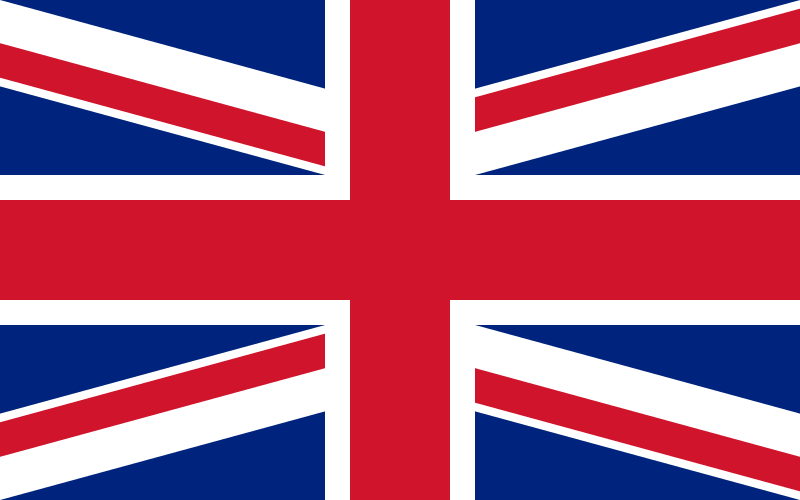
The Union Jack, also called the Union Flag, is the national flag of the United Kingdom.
The Union Jack, representing the union of three kingdoms (England, Scotland, and Ireland), blends aspects of their national flags: England’s red cross of St. George, Scotland’s white saltire of St. Andrew, and Ireland’s red saltire of St. Patrick.
As decreed by King George III, the current UK flag has been in use since 1801.
5. St. Edward’s Crown

St. Edward’s Crown is often used as the coronation crown. It was one of England’s Crown Jewels and still is among the senior Crown Jewels of the UK.
St. Edward’s Crown is made of 22-carat gold and has a circumference of 26 inches, measures 12 inches tall, and weighs a little less than 5 pounds.
The crown features 4 fleurs-de-lis alternating with 4 crosses pattée supporting two dipped arches that are topped by a monde and cross pattée.
Two-dimensional representations of the crown have been features in coats of arms, badges, and various other insignia since 1952. This is used in signifying the authority of the British monarchy throughout the territories of the Commonwealth.
6. Royal Coat of Arms of the United Kingdom

The Royal coat of arms of the United Kingdom is used to identify the Head of State.
The current royal arms consist of the arms of the former kingdoms that make up the UK. These can be traced back to the first arms of the kings of England as well as those of Scotland, with various modifications over the years as the arms of other territories acquired by the kingdom were added.
The Royal coat of Arms are used on all Acts of Parliament and the cover of all UK passports, as well as in various government departments. In 2008, the coat of arms was adapted for the reverse of the pound sterling coins.
7. Tea
The UK has been the largest tea consumer in the world since the 1700s.
Tea became a status symbol for the filthy rich of Regency England. The exhibition involved various family portraits of aristocratic families sipping tea, with an array of luxurious accoutrements to denote their opulence.
From being an upper-class beverage in Europe, tea gradually spread through all classes until it eventually became a common drink.
Today it is still regarded as a significant part of England’s identity and remains a prominent feature of its culture and society.
8. King’s Life Guard

The King’s Guard (Queen’s Guard if the monarch is a woman) consists of a company of soldiers from a single regiment split in two. They guard the Buckingham Palace and the St. James’ Palace in London.
They are best remembered as the stiff royal security guards with silly hats, making them such an unforgettable symbol of London and England.
9. Big Ben (Elizabeth Tower)
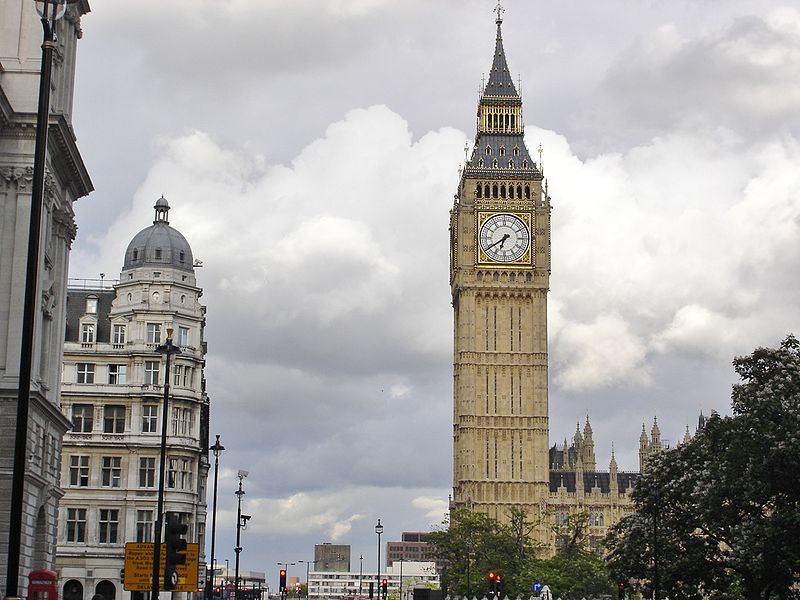
Previously known simply as the Clock Tower, Big Ben has become one of England’s most iconic symbols.
“Big Ben” is the nickname given to the Great Bell of the Great Clock of Westminster, standing high above the Palace of Westminster in the English capital.
Big Ben is well-known for its accuracy and its massive bell. In 2012, the Clock Tower was renamed the Elizabeth Tower to honor the Diamond Jubilee of Queen Elizabeth II.
Big Ben is a symbol of democracy that has become synonymous with London as well as the UK. Next to the Union Jack, Big Ben is perhaps the most recognizable symbol of England.
10. Double-decker Bus

One of the most iconic symbols of England and the UK, the red double-decker bus is a bus with two decks that has been in use since 1941.
The very first buses called “omnibuses” appeared in England in 1829. Harnessed by horses, they became the first prototypes of modern double-decker buses. These buses had a closed first class for the rich riders and an open second class for ordinary commuters.
Double-decker buses are not exclusive to London and the United Kingdom as they are used in various places in the world.
However, London’s red double-deckers are the most famous, becoming a very recognizable symbol of the city and the UK.