11 Most Popular Flower Symbols And Their Meanings
Do you want to know some of the most popular flower symbols and what they mean?
Flowers are important to humans because they promote happiness. Their natural beauty comforts us, which is why keeping them at home is a great way to combat stress and anxiety. People who are regularly exposed to flowers feel less stressed, more calm, and generally happier.
For thousands of years, flowers have been used to signify different meanings and convey messages. There are many different flower symbols out there, and each one has its own symbolic meaning.
Here are some of the most popular flower symbols and their meanings.
11 Most Popular Flower Symbols And Their Meanings

1. Lotus
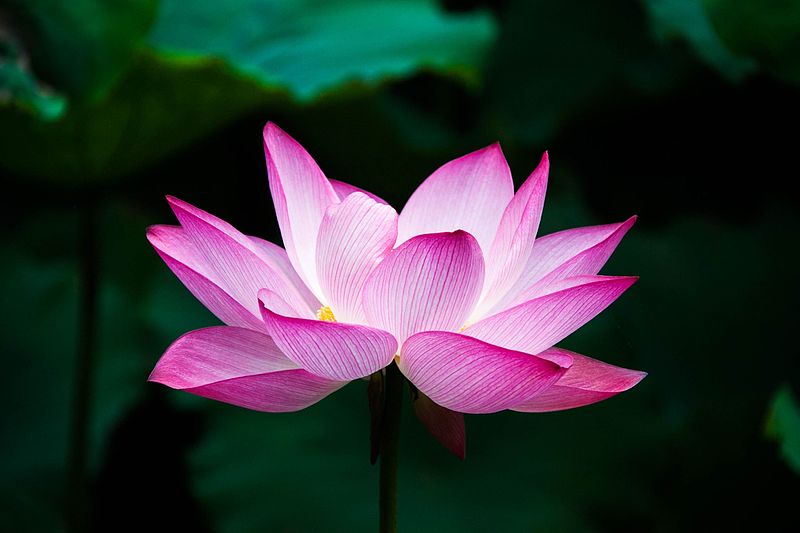
A very prominent symbol in Buddhism, the lotus flower generally symbolizes the three very significant things in the said religion: purity, faithfulness, and spiritual awakening.
As this flower is “resurrected” every day, rising and opening their blooms from the murky waters without stains at daybreak and returning back in the evening, it has also come to represent the cycle of life, death, and rebirth – hence, the moniker “flower of life.”
Lotus is colloquially called “water lily.” It is endemic to many parts of Asia where it is commonly cultivated. It is used in traditional Chinese medicine and sometimes also eaten.
2. Iris

The iris flower’s name is derived directly from the Greek word that translates to “rainbow.” It is also the name of the Greek goddess of the rainbow. It is said that “iris” refers to the wide array of colors found among the many species of this flower.
Iris is a Christian symbol that is connected with the Passion of Christ and the Resurrection. This may be due to the time this flower is in bloom, which is around Easter time during the spring season.
The common symbolisms associated with irises include nobility and royalty, hope and wisdom, and valor and trust.
3. Rose

Dubbed the “queen of flowers,” rose is an ancient flower – dating to at least some 23 to 33 million years ago.
It is most commonly used in symbolism as representative of love, romance, power, royalty, mysticism, and sensuality. These beautiful blooms also symbolize secrecy and confidentiality.
The other symbolic meanings of this flower depend on the color. For instance, a red rose – which is the most common – denotes not only love and romance but courage and beauty as well.
If it’s a red rosebud, it is used to represent beauty and purity as well. A red rose without a thorn symbolizes love at first sight. A yellow rose can be used to signify new beginnings, joy, and friendship.
4. Chrysanthemum

Chrysanthemums are native to northeastern Europe and East Asia, particularly China. It is the most popular autumn flower, hence, signifying the coming of the fall season.
Chrysanthemums have various symbolic meanings in different cultures. In general, they are a symbol of well-being, happiness, love, friendship, and longevity.
Akin to the rose, some meanings depend on the flower’s color. A green chrysanthemum stands for good health, good fortune, and rebirth. A pink chrysanthemum signifies romance and attraction, which makes it a popular flower to give to a new love, especially on a first date.
5. Myrtle

Myrtle is a common flower that’s a pale yellow or orange in color, with a fresh camphor-like sweet scent akin to eucalyptus. This flower is native to West Asia, the Indian subcontinent, the Mediterranean region, and Macaronesia off the coasts of Europe and Africa.
Myrtles were used in wedding rituals of the Romans, a practice that they adopted from the ancient Greeks.
Myrtle takes its name from the Greek word myrtos which means “sprig.” Both the tree and the flower have, for thousands of years, been employed as a symbol of good luck and prosperity, as well love, fertility, and innocence.
6. Gladiolus

Sometimes called the “sword lily” due to its leaves that are shaped like a blade, the name “gladiolus” itself derives from gladius, the Latin word for “sword.” The gladiolus flower is native to Asia, the Mediterranean, and tropical Africa.
Gladioli bloom in summer, which is why they are such a popular summer bouquet.
In flower symbolism, gladiolus denotes remembrance, moral integrity, strength of character, pride, victory, and fidelity.
7. Tiger Lily

Tiger lily is a species of lily that is endemic to China, Japan, and Korea but may also be found in the Russian Far East and sporadically sprouts in the eastern United States and New England.
Tiger lilies are popular ornamental plants, thanks to their bright orange-and-black flowers that call to mind the mighty tigers, hence the name.
They have numerous symbolic meanings in various cultures, the most important being Buddhist where these flowers are viewed as the symbol of mercy and compassion. Tiger lily also symbolizes confidence. In the past, this flower was frequently connected with nobility and royalty.
8. Carnation

Carnations come in many different hues, bringing the colors of summer to special occasions when used for bouquets, boutonnieres, and floral arrangements. They are among the world’s oldest flowers, with history dating back to the times of ancient Greeks and Romans who used them in art and decor.
Ideally given as a great alternative to rose bouquets on Mother’s Day, birthdays, or anniversaries, the carnation flower is associated with love, especially mother’s love, due to to a Christian legend that these blooms grew from the Virgin Mary’s tears as she witnessed Jesus carry the cross.
The carnation flower also symbolizes devotion, distinction, and fascination.
9. Daisy

Otherwise known as the English daisy, lawn daisy, or simply the common daisy, this flower takes its name from “daes eage,” an Old English phrase that means “day’s eye.” This is because daisies blossom at the break of dawn.
Daisy is a small yellow-disked and white-rayed flower. Having been around since 2200 BC, it is among the most ancient flowers we have today. The ancient Egyptians used daisies as herbal medicine.
In flower symbolism, daisies are loaded with positive meanings. This flower symbolizes innocence and purity, cheerfulness and happiness, as well as new beginnings.
Back in the Victorian Era, these flowers were also used as a symbol of loyalty and signified one’s ability for secrecy.
10. Tulip

Tulips are huge, showy bell-shaped blooms that come in variety of warm shades such as red, pink, white, and yellow.
The tulip flower was originally a wild flower native to Central Asia. The Turks were the first to cultivate them, a practice that was started as early as 1000 AD.
Ideally given to an object of one’s deep, unconditional love, romantic or otherwise, tulip is symbolic of absolute and faultless love.
Different colors of tulip connote different meanings. Red tulips denote passion and lust, while white ones are used as a symbol for respect, honor, and purity. Yellow tulips, on the other hand, represent jealousy and hopeless love.
11. Magnolia

In the eastern tradition, many parts of a magnolia flower are used in folk medicine. Magnolia was named after the 17th-century French botanist Pierre Magnol.
Magnolias are quite ancient, dating to around 20 million years back, with discovered fossils of these plants that date to 95 million years ago.
The magnolia flower is a symbol of luck and stability, as well as high status, perseverance, and dignity. Its white blooms, which are often used in wedding bouquets, are associated with purity and nobility.