13 Most Important Chinese Symbols And Their Meanings
Are you looking for Chinese symbols and their meanings?
Many people’s fascination in China and everything Chinese is well-founded. It is, after all, the land of noodles and dragons, kung fu and superstitions. And as if these four things combined aren’t enough to fascinate you, there’s the pandas, which are found only in the mountainous regions of central China.
China’s history and culture are arguably the richest and most complex in the world, its civilization among the oldest. Everything about China is definitely enchanting.
Chinese people, being highly tied up to their rituals and traditions, also attach great importance to their national symbols. For example, their drawings, paintings or engravings of animals and flowers, do not merely serve as decorations, but they represent symbolic values of power, success, good health, and financial success.
Here are 13 of the most important Chinese symbols and their meanings.
13 Most Important Chinese Symbols And Their Meanings

1. Dragon

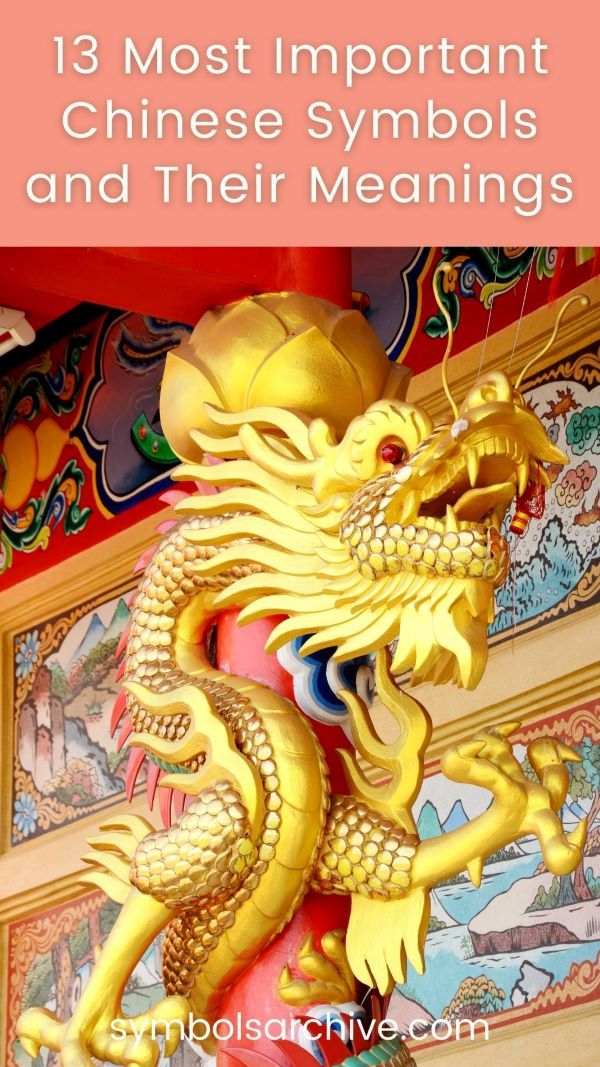
It won’t come as a surprise to learn that the dragon symbol is the most important animal symbol in Chinese culture. It symbolizes strength, health, and good fortune. It also represents the male element Yang.
Although this mythical creature is often depicted as evil in the West, it is considered to be the ultimate bringer of luck in China. Dragons, the Chinese believe, bring rain to grow the crops, and transport human souls to the heavens after death.
These creatures have long been associated with the emperor and the imperial throne, as dragons symbolize great power and strength. How important and popular the dragon symbol is in this country can easily be explained by it being the most prevalent motif on clothing, signs, and flags.
2. Yin and Yang

The Yin and Yang symbol, a circle divided by a curved line into two halves, represents duality – a belief that two opposite characteristics can exist in harmony. It is often referred to in China as “tai chi” or “taijitu.” You have likely seen this symbol many times on jewelry, clothes, decors, et cetera.
We commonly associate the Yin and Yang symbol with balance. It is simply saying that there can be no positive without a negative, no light without darkness. The Chinese culture and philosophy is deeply rooted in this concept.
3. Rooster

Along with the dragon symbol, the rooster is also widely present in Chinese decors and clothing designs.
The rooster being the most punctual of animals, serving as an alarm clock that wakes people up in the morning during the ancient times even up to the present, its obvious symbolic meaning is punctuality.
The rooster’s crowing is heard every dawn, thus signaling the beginning of a new day.
The rooster also symbolizes the Sun God. The ancient Chinese thought roosters represented the sun since they crowed every day when the sun rose.
4. Endless knot

Although the endless knot symbol originated from Buddhist India, it has become a widely recognized symbol in China acting as good luck charms given during Chinese New Year celebration.
In Feng Shui, the endless knot symbolize a long life without setbacks.
To learn more about this Endless Knot, click here.
5. Fish

If you are learning about Chinese traditions, one of the things that will stand out to you is that there is a great deal of symbolism around fish.
Since the Chinese word for fish, which is “yu,” is pronounced the same way as their word for abundance is pronounced, fish are often used as a sign of wealth.
Fish are eaten on Chinese New Year, representing their wish of being affluent all year round.
6. Bamboo

China possesses the most bamboo for any country in the world. Chinese people have been planting and using bamboo plant for as far back as 7,000 years ago. For thousands of years, they have held this plant in profound esteem.
The bamboo plant symbol is a representation of traditional Chinese values.
Multitudes of paintings and drawings have been dedicated to this highly esteemed plant throughout Chinese history.
Generally admired for its beauty and resilience, the bamboo plant represents integrity denoted by its deep roots, honor for its straight stem, and modesty for their hollow interior.
It also stands as an example of loneliness and elegance.
7. Ginkgo Tree
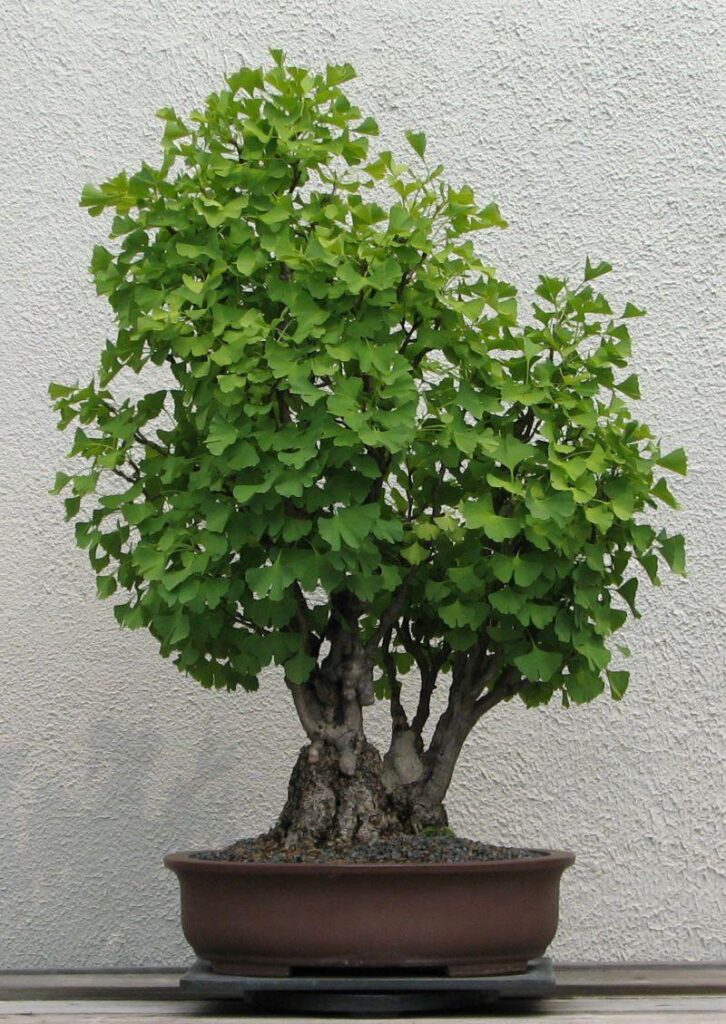
The ginkgo tree has been around for as long as the dinosaurs, with only little change. Botanists consider it a living fossil.
Because of the ginkgo tree’s antiquity and demonstration of resilience, it has become a symbol of hope and peace for the Chinese people.
The tree has an unbelievable capacity to grow where other living things cannot, and for this it is also regarded as a symbol of endurance and vitality.
8. The Fu Symbol

The character fu (福) literally means “good luck arrives.” This symbol signifies good fortune and blessing, and it is one of the most widely seen symbols in China, painted as a decoration everywhere from notebooks, building walls, to Chinese New Year posters.
The Chinese definitely love puns. As “fu” has the exact pronunciation as the Chinese word for bat, this animal has been used to symbolize good luck as well. As a substitute of the “fu” symbol, an image of 100 hundred bats can sometimes be seen in Chinese textile or ceramic art.
People across China also have the tradition of pasting the “fu” symbol on their doors or windows during Spring Festival to greet the Chinese Lunar Year.
9. Shuang Xi

Literally translated as “double joy,” this symbol is an amalgamation formed by the Chinese character for joy (喜, xi) .
A popular wedding motif for the Chinese, you will see this symbol printed onto wedding invitation cards, representing wishes to double the joy and happiness for the newly-weds.
This symbol has no religious connotation, and for this reason, you can see this symbol outside of wedding occasions.
The double joy symbol has a visual resemblance to the number 88, and because of this, 88 can also represent Double Joy.
10. Tortoise

Tortoise is ancient and wise, slow-moving and easy-going, never needing to rush or worry. For this reason the tortoise has become a symbol for longevity and firmness, as well as tranqulity and steadfastness.
Chinese mythology places the tortoise as a creature in one of the most important positions.
The Chinese people have long believed that the tortoise has supernatural powers, since this tough-shelled animal can go for along time without any food and never contract any diseases.
11. Cicada

The cicada represents resurrection, life after death, and immortality. It also symbolizes purity because it lives on dewdrops.
The Chinese hold the cicadas in high regard. These insects, belonging to the order Hemiptera, are considered true bugs. They serve as an emblem of high status in China.
In ancient times, headgear of royalty and nobles were decorated with a golden cicada with large eyes, which connote refinement and awareness of one’s surroundings.
12. The Number 8

The number 8 is a popular decorative design made of two stylized characters 喜, which literally means “joy” in Cantonese.
This figure is seen as an auspicious symbol. In fact, the Chinese believe that the more 8, the luckier – as in 88 or 888.
13. The Number 4

As opposed to the lucky 8, the number 4 in Chinese is deemed unlucky. It is the Chinese version of the “unlucky 13.”
This belief is due to the number 4 (sei) being homophonous to séi, which is the Chinese word for “death.” So don’t be surprised at a missing 4th floor or door number 4 in some buildings in East Asia.