Lotus Flower Symbol – History And Meaning
The sacred lotus plays a major role in several Indian religions such as Hinduism, Buddhism, Jainism, and Sikhism.
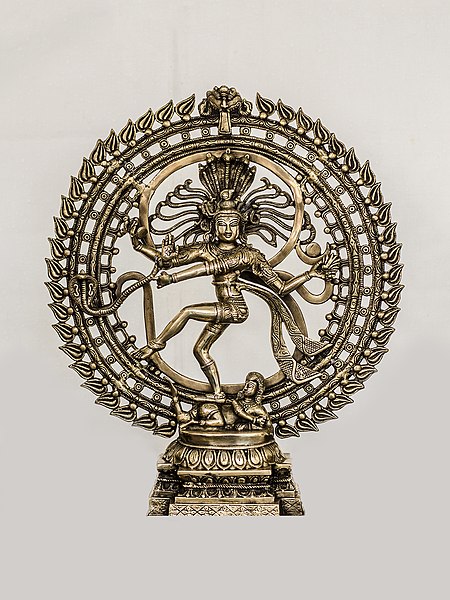
A lotus throne is a stylized lotus flower employed as the base for a figure. It is the usual pedestal used for divine figures in both Buddhist and Hindu arts.
It’s interesting to note that like no other plant, the lotus has a life cycle. With its roots attached to the mud, it sinks every night into the water and blooms anew in the morning, immaculately clean. This is thanks to the waxy protection layer on its petals. This daily resurrection of the lotus flower is associated with the concepts of spiritual enlightenment and rebirth, thus becoming a symbol of survival.
The lotus seed is just as interesting in the way that it can withstand thousands of years without water, then still be able to germinate centuries later.
Lotus Flower Symbol – History And Meaning
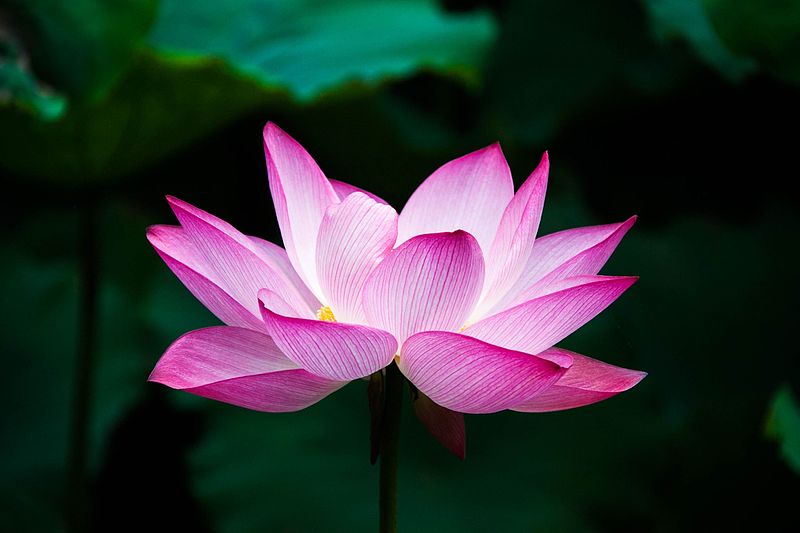
If you want to learn more about the Lotus Flower symbol, read on to find out the meaning, history, and significance of this Buddhist symbol.
Lotus Flower History
According to fossil records, the lotus flower has existed for millions of years. Some experts claim that these flowers have survived the Ice Age when plenty others went extinct.
A legend goes that lotus flowers appeared everywhere the baby Gautama Buddha stepped. In the Anguttara Nikaya, he compares himself to a lotus. They are alike in a way that the lotus flower rises from the muddy water unstained, just as he raises from this world undefiled.
Thus, the lotus has come to be interpreted in Buddhist symbolism as representative of the purity of the body, speech, and mind—as though floating above the muddy waters of physical/worldly desire and material attachment.
In Tibet, Padmasambhava, considered the Second Buddha, is also known as Padma Byung-gnas or “the Lotus-Born.” He introduced Buddhism to the Tibetans by conquering or converting local gods. He is credited for establishing the first Buddhist monastery there.
Padmasambhava is commonly depicted as holding a lotus flower.
The Lotus Flower Symbol
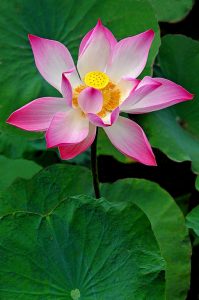
Lotus flowers generally represent purity, faithfulness, and spiritual awakening.
The lotus’ attributes embody the Buddhist ideal. This flower blooms clean and pure despite the fact that it grows in muddy ponds and swamps. Although rooted in mud, the lotus flower bloom remains dirt-free and its purity intact.
The lotus flower has become a symbol of Buddhism due to the belief that the human mind is originally pure, and its true nature is never defiled, even amidst difficulties and misfortune.
Lotuses bloom and bear fruit as well, unlike other flowers, and this is comparable to the Buddhist belief that all living beings have Buddha-nature and can attain enlightenment. Thus, the lotus has come to symbolize enlightenment.
While different colors of the lotus flower have their own symbolic meanings, the pink lotus is regarded as the “true lotus.” It is often associated with Buddhism. Pink lotuses are said to depict Buddha’s earthly symbol. Their representations depend on the state of their blooms. The close bud symbolizes passing through the spiritual path, while the fully-bloomed one denotes enlightenment.
Although Buddhists believe that the pink lotus is the main color of this flower, lotuses in other colors also have important representations. The white lotus is a symbol of peace and purity. The blue one represents a spirit’s victory over knowledge and wisdom.
The red lotus is just like all the other flowers of this color; it connotes love and compassion. Finally, the purple lotus’ petals signify the Noble Eightfold Path taught by Buddha.
Lotus Flower Symbol Meaning

The sacred lotus plant is popular for its 8-inch showy pink to white flowers and waxy green leaves. It is also referred to as Indian lotus or angel lotus.
The sacred lotus is different from the American lotus, which is also called yellow lotus because of the yellow flowers it produces. This particular lotus—Nelumbo lutea—originated from North America, while the sacred lotus or Nelumbo nucifera is native to South Asia and also grows in Australia.
The lotus flower is called the “flower of life” because of its daily resurrection’s association with the cycle of life, death, and rebirth.