Tyet Symbol – History And Meaning
Called “tit” by the Egyptians, the tyet symbol is sometimes referred to as the knot of Isis or girdle of Isis, and less commonly – Isis blood.
It is an ancient Egyptian symbol associated with Isis, the moon goddess.
Ancient egyptians used tyets as amulets of protection. They were often made of red jasper, carnelian, or red glazed ware. Green materials were also used, however, because of what this color represents – the renewal of life.
Tyet Symbol – History And Meaning
If you want to learn more about the Tyet symbol, read on to find out the meaning, history, and significance of this Egyptian symbol.
Tyet Symbol History
The origin of the tyet is not exactly known. We can only assume that its hieroglyphic sign, which looks like a knotted piece of cloth, might be a variant of the ankh.
The tyet is seen as a decorative symbol from the 3rd Dynasty, during which it appears alongside with the ankh and the djed signs, and with the was scepter later. However, the symbol itself is said to be so much older, appearing to date back to at least as early as the Predynastic Period.
An early example of this symbol was excavated from a First Dynasty tomb at Helwan, Egypt, in the 1940s. This particular example existed before the first written references to Isis.
Scholars say the symbol may not have been connected with the moon goddess at the time. Its association with her and with the healing powers attributed to her only came in later times.
Tyet amulets were buried with the dead in the early New Kingdom of Egypt (c. 1550 – 1070 BC). Examples of these date to Amenhotep III’s reign and until the end of dynastic Egyptian history. These amulets were placed within the mummy wrappings, often on the upper torso.
The Book of the Dead tells that a tyet amulet is required to be placed at a mummy’s neck in the belief that this would protect the body and repel anyone who would dare do him wrong. The amulet came with funerary texts that included various passages telling how to use it, spells included.
The Tyet Symbol
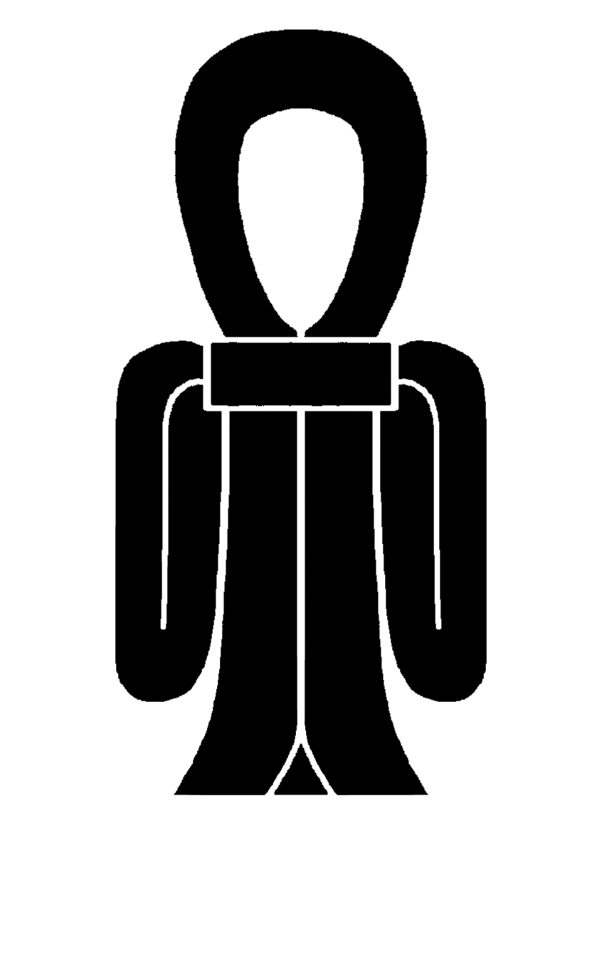
The tyet or Isis knot is akin to both the shape and usage of the ankh sign – “the key of life” – and is also often found alongside with the djed pillar and the was sceptre.
Just like its origin, the tyet’s interpretation is uncertain. Some have associated the symbol to menstruation and interpreted it as a depiction of the female reproductive organ – specifically, the uterus and the vagina.
Some assume that the tyet’s original purpose was as a means of protection. According to Egytpian mythology, the sun god – Atum-Re – knotted the tyet.
He placed it in the pregnant Isis’ womb in order to keep Seth, the god of disorder, from causing miscarriage or harming the unborn child.
Pregnant women used the tyet amulets added with magic spells to prevent bleeding and/or miscarriages. This was supported by the position where these amulets were found during excavations – tucked between the legs of women with unborn children.
Tyet Symbol Meaning

Tyet is also called by many other names. For the Egyptians, it is “tit” and sometimes spelled as “tiet” and “thet.”
This ancient symbol closely resembles the ankh, with the exception of the transverse arms curved downward. Even the tyet’s hieroglyphic sign, which is often translated as “life” or “welfare,” is similar to what the ankh represents.
The symbol is linked with Isis, which may be due to its frequent association with the djed pillar. This association with Isis leads to its other names: “the knot of Isis,” “the girdle of Isis,” and “the blood of Isis.”
The tyet symbol also resembles the knot which secures the garments of the gods in a lot of depictions, hence, the name “Isis knot” or the “knot of Isis.”
The red color that the tyet is usually seen in suggests a link with Isis’ blood.


2 Comments