Samhain Symbol – History And Meaning
While Samhain is a Celtic name for “Halloween,” it is actually a festival held to mark the end of a harvest season and the start of winter in Gaelic Ireland.
If you want to learn more about the Samhain symbol, read on to find out the meaning, history, and significance of this Celtic symbol to the Irish festival.
Samhain Symbol – History And Meaning
The Samhain festival is celebrated with feasts and bonfires. People disguise themselves in masks and fancy dresses, singing and dancing in the streets, and visiting houses for food. This custom is akin to Halloween trick-or-treating, which is not surprising since Samhain and All Saints’ (and/or All Souls’) Day are believed to have influenced each other, eventually merging into modern-day Halloween. Up until the 19th century, Gaelic Halloween customs have been referred to by folklorists as Samhain.
Samhain and Halloween are different in the way the date of celebration is picked. Samhain is seasonal since it’s in the middle of the fall equinoxes and the winter solstices. Halloween, on the other hand, is celebrated on a fixed calendar date, which—as we already know—is the 31st of October.
Samhain is one of the four Gaelic seasonal festivals. The other three are Imbolc, Beltaine, and Lughnasa. Thought to be of Celtic pagan origins, Samhain is related to numerous significant events in Irish mythology.
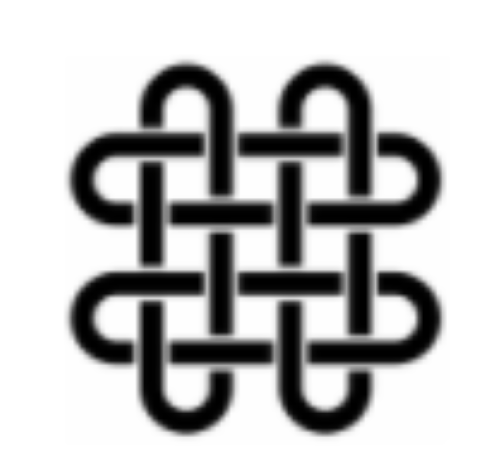
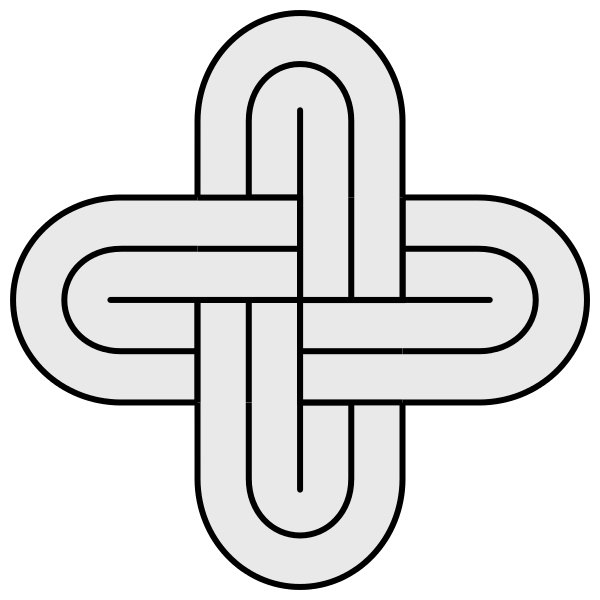
As a symbol, Samhain is a pagan motif with a looped square and two interlinking oblongs that create the shape of a cross. The looped square symbol is, in fact, the Bowen knot—also called St. John’s Arms and Gorgon’s loop.
For Mac users, you may have probably noticed the Bowen knot symbol on your Apple keyboard. We could only surmise this is due to the ties the lowly apple fruit has to the Samhain festival, but there is no evidence to support this.
Samhain History
First references to Samhain are in 9th-century Irish literature, where Samhain was associated with a lot of important events in Irish mythology. Samhain was when burial mounds were open. These ancient burial mounds were believed to be gateways to the Otherworld.
The Samhain festival is said to be marked by great feasts and gatherings. Records on this festival, however, were not done in detail until the early modern age. Samhain became associated with bonfires and sacrifices, with rituals involved. These practices were considered to have protective and cleansing powers.
Samhain was a liminal festival when the border between our world and the Otherworld narrowed. This was the time when the fairies or spirits known as the Aos Sí could easily enter this world.
The supernatural Aos Sí race was believed by scholars to be remnants of pagan gods. Offerings of food and drink appeased the Aos Sí during Samhain to ensure the people and their livestock survived the winter.
The souls of dead relatives were also believed to revisit their homes at Samhain. They were given their own place at the table during a Samhain meal.
Mumming and guising were also part of the Samhain festival, practices similar to modern-day trick-or-treating. People wearing masks and costumes visited houses, exchanging verses for food.
Another huge part of the Samhain festival was divination, frequently involving nuts—and apples. We would love to believe this custom involving apples has inspired the placement of the Bowen knot symbol on the Command key of Apple keyboards. No record can attest to this, but what an interesting coincidence!
The Samhain Symbol
The Samhain symbol is made up of a looped square—which is another Celtic symbol called the Bowen knot—and two interlapping oblong shapes, creating a cross.
The presence of the Bowen knot in the Samhain symbol makes it fitting for what Halloween represents. As mentioned earlier, Samhain has influenced the Halloween that we know today, and the Bowen knot is believed to ward off bad luck and evil spirits.
Samhain Symbol Meaning
The name “Samhain” is Modern Irish as well as Scottish Gaelic. Variations of Scottish Gaelic spellings include “Samhainn” and “Samhuinn.” The traditional name in Manx Gaelic is “Sauin.”
The Gaelic name for the month of November is derived from Samhain.
All these variations come from the Old Irish Samain or Samuin, which is the name for the medieval Irish festival held on the first day of November. This is said to come from Proto-Indo-European semo, meaning “summer,” because the Celtic summer concludd in August.
It has also been suggested to have come from Proto-Celtic samani, which means “assembly.”


One Comment