Jaguar Symbol – History And Meaning
Jaguar is the god of the underworld in Mayan mythology, representing darkness and the night sun. He was revered by the Mayans along with the snake god, Kukulkan. He symbolizes power, ferocity, and valor.
If you want to learn more about the Jaguar symbol, read on to find out the meaning, history, and significance of this Mayan symbol.
Jaguar Symbol – History And Meaning
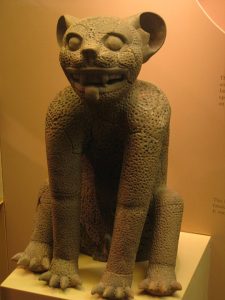
Some people believe that jaguar signifies the power to face one’s fears and/or enemies. Jaguars are also associated with the ability to foresee the future. The jaguar god, however, would often warn about disasters but would not offer reassurance.
The jaguar, according to legends, possesses the ability to move between worlds. This is thanks to its familiarity both to the trees and the water, the hunting skill at daytime as well as night, and the habit of sleeping in caves—caves being places often associated with the dead.
The jaguar plays a pertinent role in shamanism. Shamans perceive the jaguar as a nagual or a spirit companion that will protect them from malevolent spirits while they travel to the spirit realm and back to earth.
Jaguar History
Not only the Mayans built temples for the jaguar. The Aztecs and the Inca did so, too, to worship and honor the jaguar god.
Mythology and legends tell how the jaguar was seen as a god in Mexico, Guatemala, and Peru in pre-Columbian America. The Mayans, along with the Inca and the Aztecs, worshiped the feline god in some way. It is said that he was second only to Kukulkan in religious importance.
In Guatemala, archeologists have found a jar dating back to the Maya of the Late Classic Era (600-900 AD), depicting a stringed instrument that, when played, produces a sound that is so much like a jaguar’s growl.
There are different sculptures, figurines, and celts that show that the ancient Mayans knew the jungle animals that lived among them. These feral companions they knew so well have even been incorporated into their mythology.
The jaguar often appears in pre-Columbian Mesoamerican belief systems and cultures. His quickness, agility, and strength are enough to seize and kill the largest prey in the jungle.
The jaguar was associated with the ruling class and royalty, and also with hunters and warriors alike. The best hunters and warriors were said to possess jaguar souls and they adorned themselves with pelts, teeth, or claws from this giant cat.
To this day, the jaguar is still revered by the indigenous Americans who coexist with these powerful felines.
The Jaguar Symbol
Often depicted on discovered artifacts are the gods the Mayan people worshiped. These deities commonly have attributes related to the jaguar whose symbol represents strength, ferocity, and valor. The jaguar’s night vision, on the other hand, was symbolic of foresight and perception—thus symbolizing confidence, control, and leadership.
The jaguar is a trickster, a strong warrior, and a powerful leader. He is also sometimes viewed as a shapeshifter; this is so that, in human form, he could mingle and produce children with female humans.
Archeological records show that jaguars are rarely portrayed in a naturalistic fashion.
Instead, they are depicted as having a combination of human and feline traits. These figures range from a human figure with little jaguar characteristics to a shaman in his transformative pose—kneeling with his hands on his knees—to depictions as being almost completely feline.
Jaguar Symbol Meaning
Jaguar is a Native American word that translates to, “he who kills with one blow.” The jaguar is seen as representative of darkness and the underworld.
For the ancient Mayan people, the jaguar was the force that connected man to all the elements of his life, the earth, and the underworld.
Considered the lord of animals, the jaguar is often seen as a symbol of life and strength. It is a spirit animal that serves as the gatekeeper to everything unknown.