Caim Symbol (Celtic Circle) – History And Meaning
Although the Celtic civilization had left scores of symbols and icons, few records were ever written about them. We can only surmise about their mythology, culture, and religious beliefs and customs based on their remnants—the Celtic symbols.
The Celtic symbols remain a very popular choice for body art, not just for aesthetics but more so for their symbolical meanings. One of the top tattoo designs is the Caim symbol or the Celtic circle, which is actually a representation of a prayer. So-called “Celtic circle” because this prayer was done in a sacred circle at the altar during Celtic wedding ceremonies.
It’s a practice still done today by casting a ring around oneself or a person one wishes to pray for, encircling them with protection physically or otherwise.
Caim (Celtic Circle) Symbol – History And Meaning
If you want to learn more about the Caim symbol, read on to find out the meaning, history, and significance of this Celtic symbol.
Caim Symbol History
The Caim was the Celtic tradition of casting a ring or a circle of protection. It was done with the intention to protect a couple during their wedding.
Marriage was a political affair among the ancient Celts, especially when the bride and the groom came from different clans. Treachery could happen, which would often result in a battle. This is why Caim was important in any marriage ceremony.
The tradition of the bride on her groom’s left arm originated in the Scottish Highlands. As most were right-handed, the groom escorted his bride to the altar with his fighting arm free and his sword ready during a wedding ceremony. This was so he could fight an attack from any scorned suitors.
This was also the best man’s original role at a wedding. He was the couple’s “bodyguard.” He protected the bride and the groom while they came and went from the ceremony.
The sword and the casting of the ring of protection are no longer part of the modern wedding tradition. The Caim prayer remains, however, and many examples still exist today. The most noteworthy of these Caim prayers are from Alexander Carmichael’s collection called the Carmina Gadelica, which was written in circa 1900. These prayers came from the Scottish highlands and islands, and have been passed down for ages.
In pre-Christian Celtic culture, the Caim was treated as a protective spirit. At the rise of Christianity in Wales, Ireland, and Scotland, the Celtic people began to demonize the traditional Celtic spirits and abandon Druidry. The Caim later became a Christian Celtic prayer of protection.
The Caim Symbol
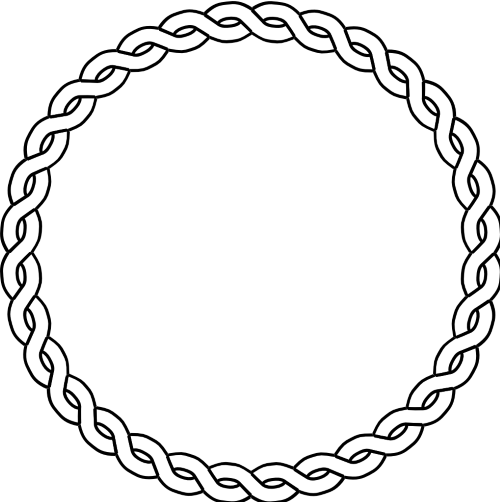
In Celtic symbolism, the Caim refers to “casting a circle of protection.” It’s a prayer with a specific rhyme and meter, created to protect the groom and the bride during a marriage ceremony.
The Caim is done by drawing a lance or a sword around the couple. The circle created is symbolic of wholeness, community, and connection to the universe. Since marriage symbolizes a new beginning, this circle conveys a wish for the best possible beginning for the newlyweds.
As a symbol, the Caim or Celtic circle, serves as a reminder of the Father Almighty’s presence and protection in dark times. It represents His love encircling us.
Caim Symbol Meaning
The Caim was the Celtic tradition of casting a ring or a circle of protection. This “circling prayer” still exists nowadays, used on yourself or someone you want to pray for. Latter-day Celts, wiccans, pagans and mystics, and even evangelicals still employ this simple drawing of a circle that symbolizes protection.
The word “Caim” is Gaelic, meaning “protection” or “sanctuary.” This term is derived from the root word meaning “circle,” “to bend/turn,” which is evident when the Caim is being drawn.