9 Most Important Symbols Of Ukraine
Do you want to know the most important symbols of Ukraine?
Located in Eastern Europe, Ukraine is bordered by seven countries: Russia to the east and northeast; Poland, Slovakia, and Hungary to the west; Belarus to the north; and Romania and Moldova to the southwest. Some 44 million people call it home and is the second-largest country in Europe after Russia.
Ukraine is famed for its natural beauty as well as rich and diverse history. It is also known for its Orthodox traditions and historical cathedrals.
On February 24, 2022, Russia invaded parts of Ukraine as a culmination of the Russo-Ukrainian War which started in 2014. This invasion has claimed tens of thousands of lives on both sides and still counting to this day.
However, despite these challenges, Ukraine continues to be a strong nation with a rich cultural heritage, as seen in many symbols that represent it.
Let’s check out some of the most important symbols of Ukraine.
9 Most Important Symbols Of Ukraine

1. Flag of Ukraine

The flag of Ukraine is a simple bicolor design featuring two horizontal bands of equal size. The bright blue top band is representative of the sky as well as the country’s desires for peace and tranquility. The bottom bright yellow band symbolizes prosperity and the country’s golden fields of wheat.
Adopted after the country earned its independence from the Soviet Union in 1992, the current Ukrainian flag was designed with the traditional colors of the coat of arms of the medieval Kingdom of Galicia-Volhynia.
The flag of Ukraine is often displayed at public events. It is a symbol of the country’s national identity, pride, and unity.
2. Coat of Arms of Ukraine
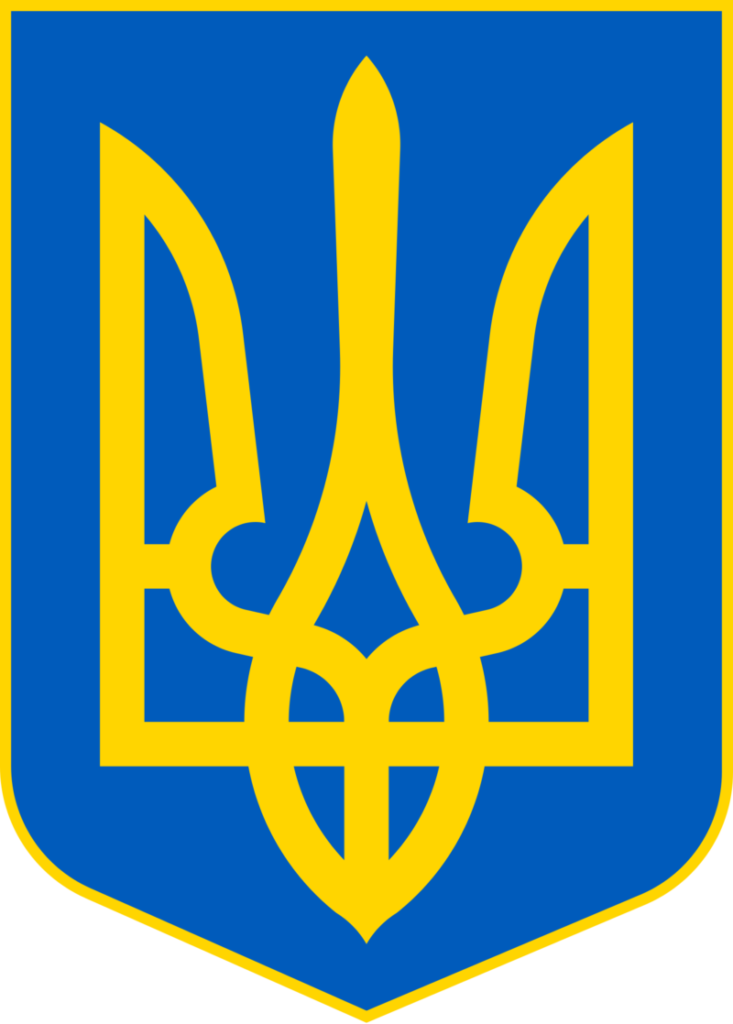
A golden trident on a blue shield and surrounded by a wreath of golden wheat, the Coat of Arms of Ukraine is symbolic of the country’s cultural heritage, faith, independence, and sovereignty.
The Coat of Arms has been modified several times throughout Ukraine’s history, with the current design being adopted in 1992, after the country became independent from the Soviet Union.
The blue shield featured on the Coat of Arms represents both the sky and the country’s wish for peace and tranquility. The golden wheat wreath surrounding the trident symbol represents prosperity and abundance, which are reflected in the country’s rich agricultural tradition.
The coat of arms is seen on Ukrainian currency and other national symbols. It is also used in official government documents.
3. Tryzub (The Trident of Volodymyr the Great)

The trident of Volodymyr the Great, called “tryzub” in Ukrainian, is an emblem that has been linked with Ukraine for centuries. It is seen on the country’s coat of arms and national flag.
One of its earliest known uses dates as far back to the 10th century, when it was employed by Volodymyr the Great – a ruler of the medieval state of Kyivan Rus’, which included parts of what is now Ukraine, Russia, and Belarus – as his personal symbol.
The tryzub is a stylized golden three-pronged fork or spear, with each prong denoting a different aspect of Ukraine’s cultural identity.
The first prong serves as a symbol of the cultural heritage of the Ukrainian people, which includes their language, music, and traditions.
The second prong is representative of their Orthodox Christian faith, which has been an important part of their culture for centuries. The third prong symbolizes the Ukrainian people’s desire for freedom and independence.
The trident remains a powerful symbol for the Ukrainian people, serving as a symbol of their national identity despite centuries of foreign domination and oppression.
4. Maidan Nezalezhnosti (Independence Square)
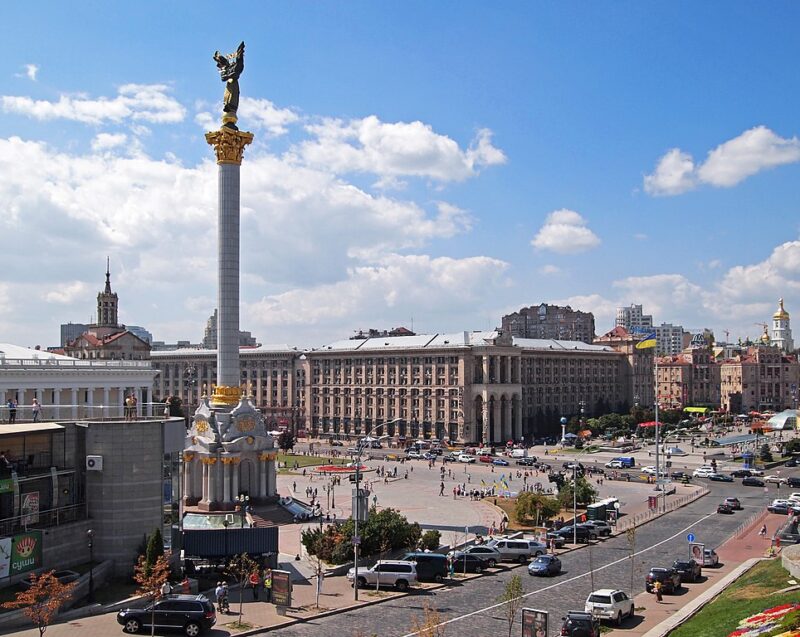
Maidan Nezalezhnosti, which literally means “Independence Square,” is a central square located in the heart of the Ukrainian capital, Kiev. To locals, this iconic square is simply called Maidan (“square”).
Maidan Nezalezhnosti is the birthplace of the country’s new fight for democracy and freedom in the 21st century. Today it serves as an important historic and cultural site.
Situated close to European Square, Maidan is surrounded by other important landmarks, including the Independence Monument, the Monument to the Founders of Kyiv, and the Building of the Trade Unions Federation of Ukraine.
A popular meeting place for both locals and tourists, the square houses a slew of shops and restaurants.
Maidan Nezalezhnosti is an important symbol of Ukrainian national identity and pride. It continues to be an integral part of the city’s cultural and political landscape.
5. The Cossacks
The Cossacks were brave warriors and horsemen who fought against invading Ottoman, Russian, and Polish armies in Ukraine’s history.
Today, they are used as an important symbol of the country’s cultural heritage and national identity.
Often viewed as a symbol of strength, bravery, and independence for the Ukrainian people, the Cossacks’ dedication to safeguarding their lands and fighting for liberty has made them a strong representation of the country’s resistance against invasion and oppression.
The Cossacks remain an important symbol of Ukrainian national pride and identity. Their symbols are often seen in Ukrainian art, literature, traditional dresses, embroidery, and other folk arts and cultural expressions.
6. Hryvnia

The national currency of Ukraine, hryvnia is an important symbol of the country’s economic and financial independence. The word “hryvnia” derives from a traditional Ukrainian necklace that’s made of gold or silver, which served as a form of currency during ancient times. It is pronounced as huh-riv’-nyuh.
The hryvnia, together with its 100th part called the kopiika, was introduced during the Ukrainian monetary reform in September 1996, replacing the former Soviet ruble as Ukraine’s official currency.
Hryvnia banknotes and coins feature several important symbols of Ukraine’s history and culture, including the city of Kyiv (Kiev) and the country’s coat of arms.
Apart from its economic importance, the hryvnia also serves as a prominent symbol of Ukraine’s independence and sovereignty.
7. The Crown of Rus’
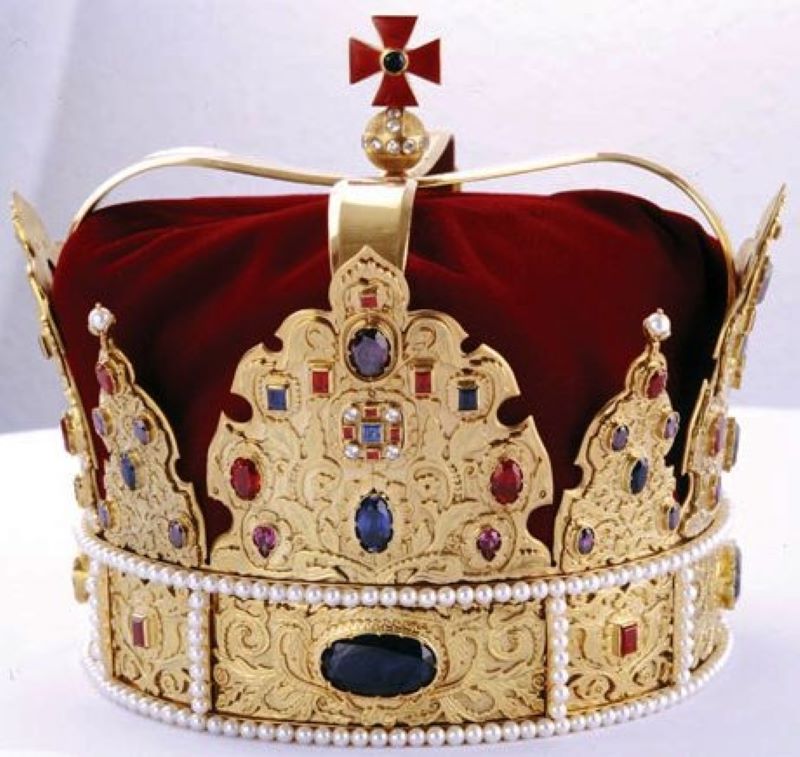
The Crown of Rus’ is said to have been created in the 11th century for Danylo Romanovych, the ruling prince of the Kyivan Rus’ state. The crown was used by several of the Prince Danylo Romanovych’s successors.
The Crown of Rus’ is a historic symbol of Kyivan Rus’. Now it serves as a symbol of Ukraine’s ancient roots, reflecting the country’s long history and its connections to the wider Slavic world.
While it was seized from Ukraine during the Soviet reign and is now showcased at the State Tretyakov Gallery in Moscow, Russia, the Crown of Rus’ remains an important symbol of Ukrainian pride and identity.
8. Pysanka
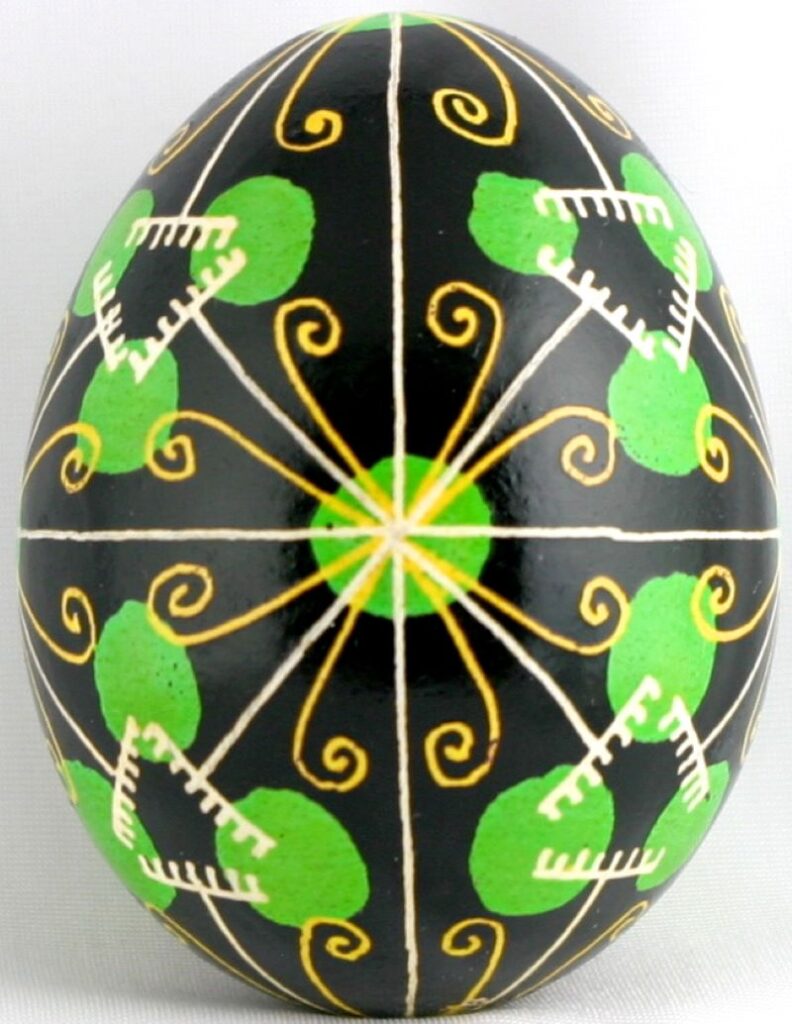
Pysanka is a decorated Easter egg with intricate traditional Ukrainian folk designs using an ancient wax-resist method or batik.
The word “pysanka” and its plural form “pysanky” are derived from the Ukrainian word pysaty, meaning “to write.” As a symbol, it signifies the method of creating the designs on the egg.
Pysanky are an important part of Ukraine’s Easter traditions. These decorated eggs are traditionally exchanged as gifts during this Christian holiday. Pysanky are also showcased as decorative pieces throughout the year. They are sometimes used as adornments in weddings and other traditional Ukrainian celebrations.
Pysanky are an important representation of Ukrainian folk art and culture, recognized as Ukraine’s symbol both in and out of the country.
9. The Bulava
The Bulava is also referred to as the Mace, a traditional Ukrainian symbol of power, authority, and sovereignty. It is a ceremonial staff made of wood and decorated with various elements such as gems, precious metals, and intricate carvings.
In the past, Ukrainian Hetmans (military leaders) carried the Bulava during official events and ceremonies. It was used as a symbol of the Hetman’s power and authority. The Bulava was a prominent part of his regalia.
Now we see the Bulava as a prominent feature on the coat of arms of Ukraine, depicted as a gold mace with a couple of stylized wings on a blue background.